By Sherri Weiss, VAN contributor
Having worked in aging services, I never lose sight of aging realities — some rewarding, some annoying. One example of where people may get in trouble is giving little thought and planning to their post-65 housing. Ignorance is NOT (necessarily) bliss.
After 40 years together, my spouse and I have owned three homes, the last a townhome we lived in for 24 years. A modest lifestyle suits us. With aging unknowns ahead, we decided to change our living environment from ownership to lease, and to control the downsizing process ourselves rather than burden others. The goal: We wanted a simple, possession-light life.
Family and friends alike smiled at our news, but their demeanor and unspoken questions shouted “Are you sure?” and “You won’t be happy in an apartment!” We stayed focused, determined to complete this life change on our own while we could.

With no children to call upon and family at a distance, we knew friends could help if asked. But being the independent women we are, we proudly reminded one other “we can do this!”
As we surveyed our household, we knew the moving process meant:
- We must go through all possessions and tag them as keep, toss, and give away.
- We must list all the “to do” steps of moving and assign them to one or the other with a deadline.
- Our overall timeline must allow us to maintain our sanity and health!
If you, too, are making or considering a residence change that requires true downsizing, read on for some do-it-yourself suggestions.
Create a timeline
Create a detailed timeline that includes sections on finding your new residence, getting your existing residence ready to sell/lease, outlining the steps of moving, and coordinating the business/operational needs of changing your address.
Lessons learned:
- Build in enough time to accomplish each line item with minimal stress, which reduces irritation and disagreement!
- Choose a new residence that fits how you want to live moving forward, NOT based on your current lifestyle and furnishings.
List your “to do” items
Jot down a list of action items for each section of the timeline. Assign each item to the person most suited to handling it and include a deadline for completing it.
Lessons learned:
- A critical “to do” is to take detailed measurements of your larger “keep” furnishings and match those measurements with spaces in the new residence, which will help tell you what to place where. It also helps with assessing your possessions and allows you to consider new furnishings.
- Another important “to do” is to sort through all stored business and personal paperwork and shred as needed; we reduced our paper holdings by 50 percent.
- We decided we now wanted furnishings that we could move around ourselves; no more large, heavy things.
Survey your possessions
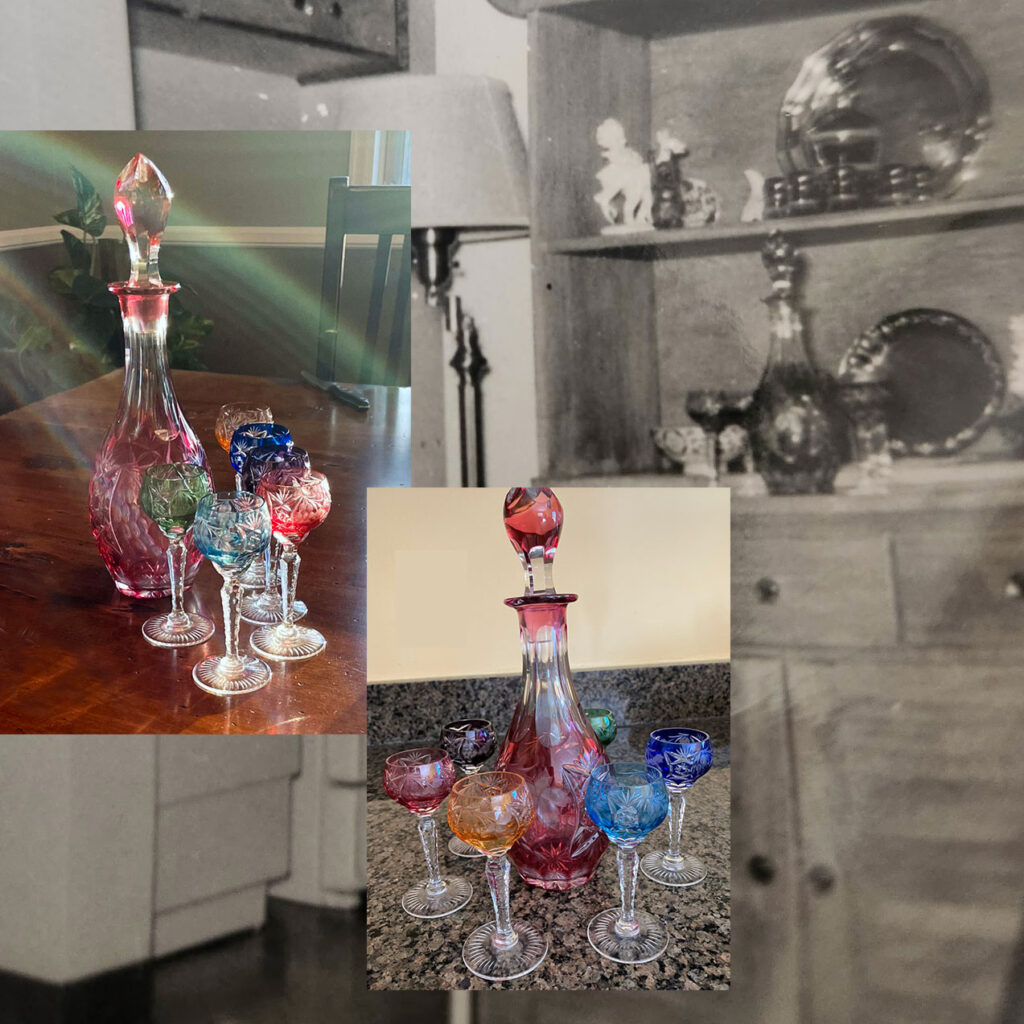
Whether you have few or many possessions, we learned it was helpful to assign ourselves to areas of the house based on interest. For example, I coordinated the review and placement of all garage and yard items while my spouse handled the kitchen and bathroom. We jointly reviewed the bedroom, office, and personal mementos. The surveying process took weeks! Yet, we had built in the needed time, wanting to look at every piece in our home with care and reflection on its importance in our lives.
Lesson learned: Every possession has meaning, so develop criteria that will help you decide whether to keep, toss, or give away each item. Sample criteria:
- Can you truly transfer what the item means to you to someone else?
- Have you regularly used the item?
- Does the item nourish your well-being?
Glitches in the process are inevitable, but stay true to it.
Be thoughtful about possessions
It can be rewarding and even fun when you thoughtfully consider how each possession might best experience a new life in a new setting. Our examples:
- Much of our furniture was given to people referred by neighbors: A young couple buying their first home and a woman living alone with few furnishings; our modular office furniture was given to a younger neighbor who works from home
- Cherished antique tools found a new home in a rural community’s Pioneer Days barn; everyday tools and other garage stuff were donated to a Habitat for Humanity ReStore
- An outdoor metal sculpture and deck furnishings were given to a neighbor
- LPs from the 1960s to 1990s went to a vintage vinyl music store
- Native American art and furnishings were given to a trading post of Native American art, jewelry, and crafts
- Electronic devices went to a Microcenter store for retooling and donation to nonprofits
- A 50-year-old, like new, acoustic guitar went to a guitar repair shop and was sold on consignment to an older, beginner guitarist
- An original oil painting by a local African American artist was donated to the Minnesota African American Heritage Museum and Gallery
- We sent photos to family and friends of long-held artwork and pottery we decided not to move; items admired by the owners of our favorite inn in Wisconsin now reside there and pieces favored by friends and relatives are now in their homes
- Family memorabilia went to nieces and nephews expressing interest in pieces whose meaning might now be part of them
We moved from a 1,500-square foot townhome (with a two-car garage) to a 900-square foot apartment. After 6 months, it’s going great! Many adjustments in routines do happen, so being flexible is a key to success.
Anyone can downsize with purpose, and the rewards might surprise you.