Rebecca Sash, VAN contributor
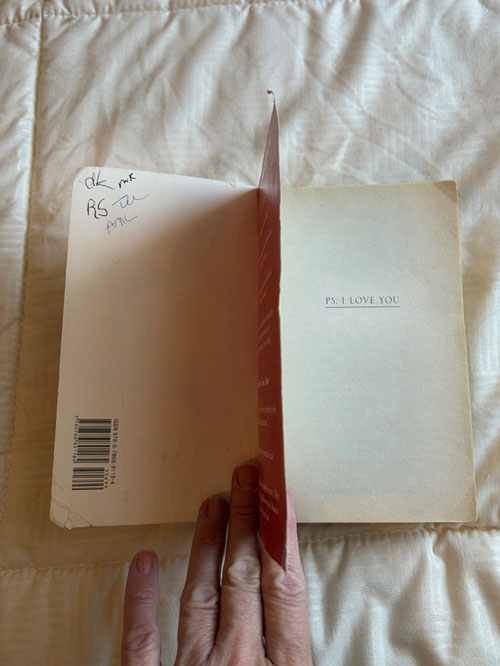
Ever since I was five years old, I spent my summers and school breaks at my grandma’s house. No matter the day, you could always find her with a book in hand. She seemed to move through them effortlessly, finishing one and starting another almost as quickly as I could ask what it was about. I was fascinated by how fast she read, but even more by how much she loved it.
Books in our family were never just owned, they were shared. They traveled between my grandma to my mom, to my three aunts, and even a close circle of friends. Each time someone finished a book, they would write their initials inside the front cover before passing it along, a quiet way of marking their place in its journey and making sure no one accidentally read the same story twice.
Eventually, I became part of that tradition. Whenever I brought a book with me to my grandma’s house, whether it was assigned at school or something I’d picked out at the book fair, my grandma would ask if she could read it. Without fail, she would finish it before my parents came to pick me up, carefully adding her initials to the inside cover. At the time, it felt like a small, almost ordinary act. Looking back, I realized it was something much more meaningful.
Although my grandma has since passed, her legacy lives on in the women of our family. The tradition of being voracious readers didn’t end with her, it grew. Today, I’m reading a book with my 7-year-old daughter called Spunky by Dori Brink, published in 1980. This is the very same copy my mom bought when she was in middle school. Soon, my daughter will add her own initials beside my grandma’s, becoming part of a story that extends far beyond the pages of a single book. What started as a simple habit has become something lasting: a quiet legacy of curiosity, connection, and love for reading that continues to shape each new generation.
Building a legacy is about far more than accumulating wealth or passing down assets. At its core, it’s about leaving something meaningful behind; something that reflects who you are and what you value.
Building a legacy is about far more than accumulating wealth or passing down assets. At its core, it’s about leaving something meaningful behind; something that reflects who you are and what you value. It’s the traditions you nurture, the lessons you share, and the connections you create across generations.
A legacy can take many forms. It might live in a digital archive of photos and stories, in traditions that are repeated year after year, in the wisdom and life lessons you pass along, or in the relationships that tie generations together in a deeper way. Often, it’s not the grand gestures that endure, but the small, intentional ones.
Getting started doesn’t have to be complicated. It can be as simple as writing down a favorite family recipe, sharing the story behind a cherished object, or taking the time to document memories you don’t want forgotten. These small acts, done consistently, become the threads that weave a lasting legacy.
And the impact is powerful for both sides. For older adults, legacy-building fosters a sense of purpose, reflection, and connection. It reinforces the idea that their experiences and stories matter. For future generations, it offers something equally valuable: a sense of identity, guidance, and belonging. They inherit not just memories but also meaning.
This isn’t just about looking back. It’s about building a bridge; one that connects past, present, and future. A bridge that carries forward values, stories, and love in a way that continues to shape lives long after we’re gone.
Rebecca Sash is the director of the Arrowhead Area Agency on Aging. This article was first published in the AAAA May Update and is adapted with permission.